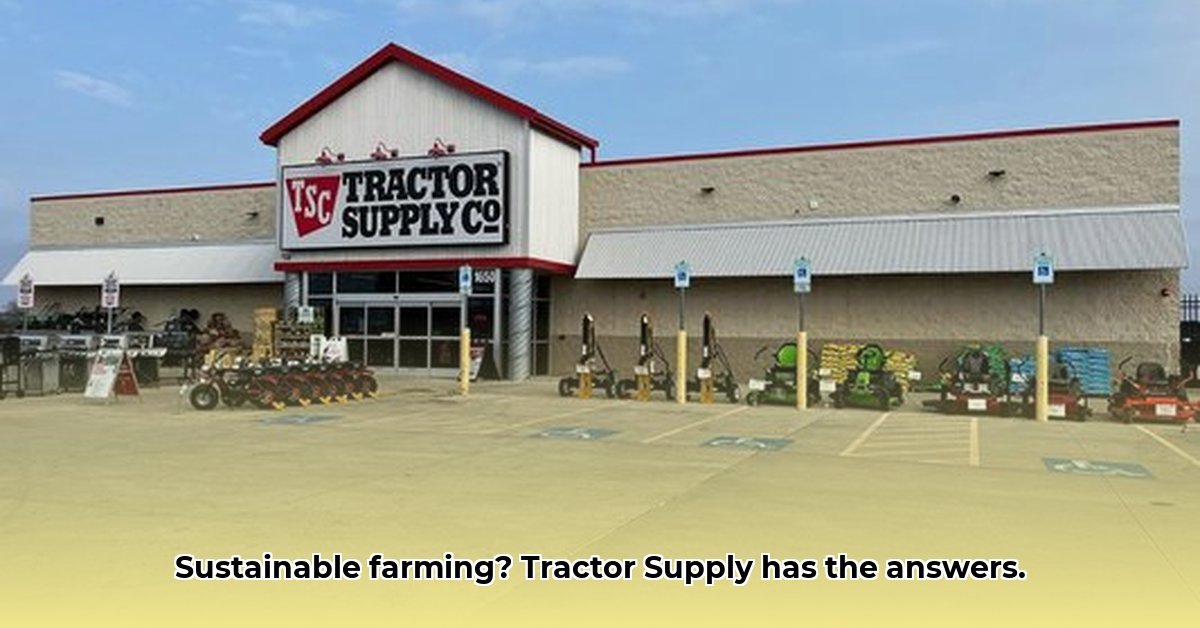
Tractor Supply's Role in Sustainable Agriculture: A Case Study
Tractor Supply Company (TSC) plays a significant role in the agricultural landscape, providing farmers and ranchers with the tools and resources they need. But how effectively does TSC support sustainable agricultural practices? This article examines TSC's contributions, highlighting both its successes and areas for improvement. How can farmers leverage TSC's resources to minimize their environmental impact? Let's delve into the details. For more information on sustainable seeds, check out this resource: Crimson Clover Seed.
TSC's Product Portfolio and its Impact on Sustainability
TSC boasts a vast inventory ranging from seeds and tools to animal feed and fencing. This wide selection offers farmers access to sustainable solutions, including organic seeds, water conservation tools, and eco-friendly fencing materials. However, TSC also carries products with potentially negative environmental consequences, such as certain fertilizers and pesticides. This duality presents a challenge: responsible selection and utilization are crucial for realizing TSC's contribution to sustainable agriculture. Is the convenience of one-stop shopping for all farming needs worth the potential environmental tradeoffs?
Transparency and Accountability: A Critical Assessment
A key area demanding improvement is TSC's transparency concerning its sustainability initiatives. Currently, readily available data on the environmental impact of its supply chain is limited. This lack of transparent information hinders accurate assessment of TSC’s overall contribution to sustainable agriculture. Increased openness and data disclosure build consumer trust, encouraging responsible purchasing decisions. How can TSC foster greater accountability and strengthen its commitment to environmental stewardship?
Actionable Steps for a Greener Future: A Collaborative Approach
Achieving sustainable agriculture requires collaboration amongst TSC, its customers, and various stakeholders. This requires a multifaceted strategy encompassing short-term and long-term goals.
Immediate Actions (Within One Year)
- Enhanced Transparency: TSC should prioritize enhanced transparency regarding its product sourcing and supply chain environmental impact. The publication of detailed sustainability reports, including Scope 3 emissions data, would be a critical step.
- Pilot Programs: Implementing pilot programs featuring eco-friendly product alternatives and sustainable farming techniques would demonstrate TSC’s commitment and provide valuable data for future initiatives.
Long-Term Strategies (3-5 Years)
- Comprehensive Sustainability Goals: TSC needs to define clear, measurable, achievable, relevant, and time-bound (SMART) sustainability goals, focusing on supply chain optimization and resource efficiency.
- Educational Initiatives: Investing in comprehensive educational programs for customers and employees on sustainable agricultural practices would significantly improve the effectiveness of TSC's efforts. This could involve workshops, online resources, and partnerships with agricultural experts.
Mitigating Environmental Risks in Agricultural Practices
Several agricultural practices carry environmental risks that can be mitigated through informed choices and responsible product utilization.
| Technology/Practice | Risk Level | Mitigation Strategy |
|---|---|---|
| Conventional Fertilizers | High | Transition to organic and sustainably sourced fertilizers; promote responsible application techniques. |
| Intensive Livestock Practices | Medium | Support animal welfare standards; promote sustainable grazing practices; transition to improved feed alternatives. |
| Pesticide Use | High | Promote integrated pest management (IPM); highlight biologically based pest control solutions; focus on responsible pesticide use. |
| Fossil Fuel-powered Equipment | Medium | Promote fuel-efficient equipment; explore electric or alternative energy powered machinery. |
| Packaging Waste | Low | Implement robust recycling and composting programs for both in-store and product packaging. |
TSC's Progress and Future Challenges: A Balanced Perspective
TSC has demonstrated progress in environmental performance. Their 2019 results show a 29% reduction in carbon emissions per square foot compared to 2015, exceeding initial targets. They’ve also established ambitious future goals for emissions reduction and water conservation. However, the lack of detailed information on Scope 3 emissions limits a complete assessment of their sustainability impact. Greater transparency in this area is necessary for full accountability. Will TSC's future success hinge on addressing these challenges proactively?
Key Takeaways:
- TSC's sustainability efforts show progress in carbon reduction and water conservation, exceeding initial goals in some areas.
- Comprehensive transparency, particularly concerning Scope 3 emissions, is crucial for a complete evaluation of TSC’s impact.
- Collaborative efforts with industry partners demonstrate TSC's commitment to long-term solutions.
- Farmers can utilize TSC's resources to adopt more sustainable agricultural practices.
This article aims to provide a balanced and informative assessment of Tractor Supply Company's role in sustainable agriculture, encouraging a critical yet constructive perspective on its ongoing efforts.